

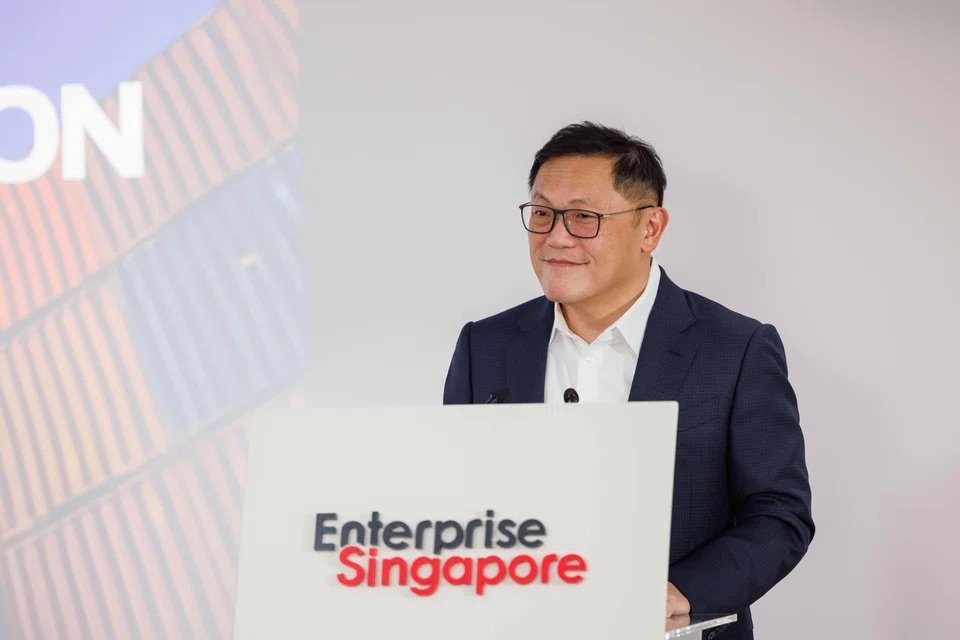
As global economic conditions grow more volatile, companies are increasingly reassessing where and how they grow. Trade tensions, persistent tariffs, geopolitical fragmentation and slowing growth in traditional markets are pushing businesses to look beyond established geographies. In this context, Southeast Asia is emerging as a critical region for diversification and long-term expansion, with Singapore playing a central role as a gateway and operating base.
A Region Positioned for Growth Amid Uncertainty
Southeast Asia sits at the intersection of major global trade flows and continues to benefit from structural tailwinds: a growing consumer base, rising middle class demand, ongoing digital adoption and increasing intra-Asian trade.
At a time when supply chains are being reconfigured and market concentration risks are being reduced, the region offers companies access to multiple markets with varied demand profiles, helping to spread risk while unlocking new growth.
While global trade conditions remain fragile heading into 2026, Southeast Asia has demonstrated relative resilience.
Companies operating in or expanding into the region are not immune to external shocks, but they benefit from greater flexibility in sourcing, manufacturing, distribution and market access compared to more concentrated or protectionist regions.
Singapore as a Strategic Entry and Control Hub
Within Southeast Asia, Singapore continues to serve as a preferred base for companies seeking to enter, coordinate and scale across the region. Its value lies not in market size, but in its role as a platform economy offering regulatory clarity, legal certainty, deep capital markets, advanced digital infrastructure and strong connectivity to global and regional partners.
For companies navigating uncertain times, Singapore provides a stable environment from which to manage risk while engaging with faster-growing but more complex regional markets such as Indonesia, Vietnam, Thailand and the Philippines. It also functions as a neutral hub for managing cross-border trade, intellectual property, regional headquarters, partnerships and talent.
Responding to Trade Friction and Market Fragmentation
As tariffs and trade barriers persist particularly in strategic sectors such as technology, electronics and pharmaceuticals companies are increasingly pursuing market and supply chain diversification. Southeast Asia offers practical options to rebalance exposure, whether through alternative production locations, new customer markets or regional distribution networks.
Support frameworks in Singapore and the wider region are increasingly focused on helping companies navigate trade complexity, adapt to evolving tariff regimes and rethink go-to-market strategies.
Advisory and digital platforms have expanded to guide businesses through regulatory, operational and strategic challenges, particularly for small and mid-sized firms entering the region for the first time.
Technology, AI and Operational Resilience
Another defining feature of the region’s appeal is its rapid adoption of digital tools and artificial intelligence. Companies expanding into Southeast Asia are leveraging technology not only to drive growth, but also to improve productivity, manage labour constraints and build operational resilience.
Singapore, in particular, is positioning itself as a regional hub for AI enabled business transformation, enabling firms to pilot, deploy and scale technology driven solutions that can be adapted across diverse Southeast Asian markets.
A Pragmatic Growth Play for the Next Cycle
Recent experience has shown that companies which continue to invest selectively and strategically during periods of uncertainty tend to emerge stronger.
In Southeast Asia, many businesses have pursued smaller, targeted transformation initiatives, prioritising flexibility, cost efficiency and market optionality over large, capital-intensive bets.
For international companies considering their next phase of growth, the region offers a compelling balance between exposure to long-term demand growth, combined with increasing institutional support, digital readiness and regional integration.
As uncertainty becomes a structural feature of the global economy rather than a temporary phase, expanding into new markets is no longer optional, it is a risk management strategy.
Southeast Asia, anchored by Singapore, is becoming a cornerstone of that strategy.





This content is gold. Thank you so much!
I hadn’t considered this angle before. It’s refreshing!
Hey, heard some whispers about 6666betvip. Is it worth the VIP treatment? Give it a whirl and tell me if it’s the real deal 6666betvip.
Okay, Kinh88vina is a bit of a deep dive. Definitely has its own vibe. I’d say it’s worth checking out if you’re into a more niche or localized experience. Might not be for everyone, but could be your cup of tea. See for yourself here kinh88vina
Been playing around on pk69game. Got a few unique games I haven’t seen elsewhere. Not a bad way to kill some time, honestly. Check it out for yourself: pk69game
Hm88bet… hmm, never heard of it. Guess I gotta do some research! Always looking for reliable betting sites hm88bet!
Jilijiliph, sounds kinda catchy! Wonder what they offer. Gotta check out their selection of games jilijiliph!
Alright, Bongdalu.com 6. Need my football updates! This looks promising for live scores and maybe some betting tips bongdalu.com 6!
777cbgameapk has got to be one of my favorite online gaming site out there! There’s some real potential here. Give it a shot! You won’t be disappointed: 777cbgameapk.
Okay, so checked out baji666 after seeing it mentioned. It is an interesting option with somethings to offer. Take a look and see, some nice stuff. baji666
Casinomexok is my new go-to! Found it super easy to navigate, and the games are actually pretty fun. Been having decent luck so far, fingers crossed it keeps up! Check it out: casinomexok