
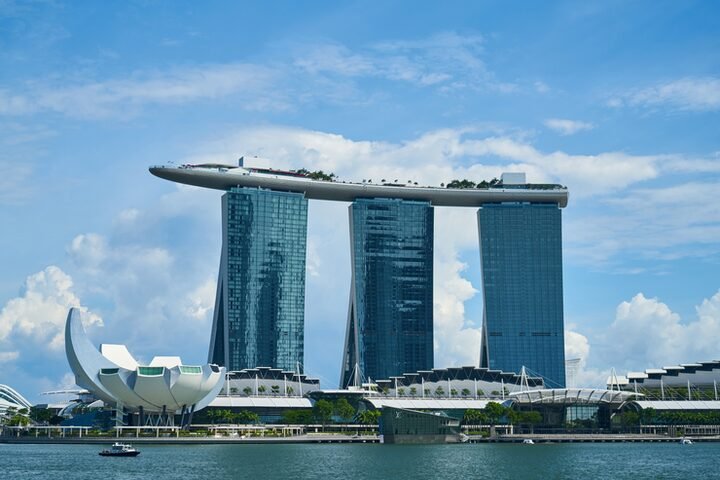
Singapore is taking a decisive step to strengthen its position as Asia’s trusted financial hub with the formation of the Growth Capital Workgroup a high-level initiative designed to close the gap between private capital and public listings.
Announced in the context of the nation’s economic strategy and supported by the (Monetary Authority of Singapore- MAS) and the (Ministry of Trade and Industry – MTI), the workgroup signals a structural shift: growth capital is no longer viewed as a peripheral asset class, but as core infrastructure for the next phase of Singapore’s development.
A Leadership Signal: Public–Private Alignment at the Highest Level
The Growth Capital Workgroup is led by Chee Hong Tat, Deputy Chairman of MAS and Minister for National Development. Its composition reflects the seriousness of the mandate.
The group includes senior leadership from GIC, Temasek Holdings, DBS and Economic Development Board of Singapore.
This is not a narrow regulatory review. It is a coordinated ecosystem effort spanning sovereign capital, private markets, banking, enterprise development, and financial policy.
The mandate is clear: ensure companies can access suitable funding at every stage of growth from venture capital to private markets and ultimately to IPO.
The Structural Challenge: The Missing Middle
Singapore has long excelled in Bank-based finance, Institutional asset management, Public market infrastructure.
However, as Asian economies mature, reliance on traditional bank lending alone is insufficient.
Many high-growth companies face a familiar challenge.
- Early-stage venture funding is available.
- Growth-stage capital becomes fragmented.
- Public market readiness is delayed or diverted overseas.
This “missing middle” between late-stage private capital and public listing weakens the domestic IPO pipeline.
Prime Minister Lawrence Wong highlighted this during Budget 2026, reinforcing that growth capital must be viewed as an ecosystem, not a standalone financing instrument.
When the ecosystem functions cohesively, different components reinforce one another, creating network effects that expand both services and investor participation.
From Venture to IPO, Strengthening the Full Value Chain
The Workgroup will examine the full financing value chain from Deal origination, Capital raising and mobilisation, Capital recycling and Exit pathways.
Its scope spans from Venture capital, Private equity, Private credit, Securitised assets.
Importantly, this builds on momentum from the Equities Market Review Group but goes upstream. Instead of focusing solely on public market vibrancy, it addresses the supply pipeline of companies capable of listing.
In ecosystems such as the United States, Europe, China, and India, capital exists across every stage from seed to growth supported by local investor participation. Singapore aims to replicate that continuity within an Asian context.
Why Growth Capital Matters Strategically
1. Diversifying Beyond Bank Lending
Asian economies have historically leaned heavily on bank financing.
More diverse funding sources provide Longer-term capital, Risk-sharing mechanisms, Innovation-friendly structures, Resilience against credit cycle shocks.
Private capital markets complement traditional lending and public markets, broadening the financing toolkit available to enterprises.
2. Capturing Asia’s Capital Flows
Asia presents growing demand for infrastructure and enterprise financing, rising investor appetite for regional exposure and diversification.
As global investors rebalance risk and search for new growth markets, Singapore has an opportunity to position itself as Asia’s growth capital hub not merely a booking centre for funds, but a true capital formation centre.
3. Supporting Regional Entrepreneurs
One identified priority is strengthening the ecosystem so that entrepreneurs both from Singapore and across Southeast Asia choose to Incorporate, Raise capital, Scale and Eventually list in Singapore.
This enhances economic depth, not just financial intermediation.
4. Financing Infrastructure at Scale
The second key focus area is infrastructure a sector requiring long-duration capital and sophisticated structuring capabilities.
Given Singapore’s strength in institutional asset management and regulatory credibility, it is well positioned to intermediate regional infrastructure capital flows.
Beyond Capital: The Participation Question
Some observers argue that capital supply is not the core issue. Ong Hwee Li of SAC Capital suggests the larger gap lies in sustaining investor participation in Singapore’s capital markets.
In other words funding pools exist. But investor engagement, liquidity, and narrative may need strengthening.
Growth capital reform therefore intersects with market confidence, research coverage, and domestic investor activation.
2027 Horizon: Structural, Not Tactical Reform
The Workgroup aims to complete its review by end-2027 a timeline that reflects structural ambition rather than short-term stimulus.
If successful, the initiative could:
Create a smoother venture-to-IPO pipeline
Deepen private capital markets
Strengthen IPO quality and quantity
Enhance capital recycling
Anchor more regional champions in Singapore
The Bigger Picture: From Financial Hub to Capital Formation Hub
Singapore has long been recognised as a trusted financial centre. The Growth Capital Workgroup signals a shift toward becoming a leading capital formation centre particularly for Asia’s next generation of growth companies.
The difference is subtle but profound:
A financial hub intermediates capital.
A capital formation hub creates ecosystems where companies are built, scaled, funded, and listed.
If the ecosystem components reinforce one another venture, growth, institutional capital, infrastructure, public markets, the resulting network effects could reshape Singapore’s competitive position in the region.
Growth capital is no longer a niche conversation. It is becoming core economic architecture.
And the question now is not whether Singapore has the pieces but whether it can integrate them into a seamless, reinforcing system that attracts both entrepreneurs and global capital at scale.
Read more on this newspaper link of Business Times published on Feb 13th 2026